
My ChatGPT Fact Checking Prompt for AI Hallucinations

Updated: Mar 24
How to Stop AI from Making Stuff Up
TL;DR: AI tools can generate polished content that is false and unsupported. If you use ChatGPT, Claude, Gemini, or any other AI tool in content, marketing, or client work, you need a fact-checking step before anything gets published.
If you're using AI to draft content, summarize articles, or handle parts of your workflow, how sure it sounds has nothing to do with how accurate it is.
ChatGPT and other AI tools can (and will) hallucinate.
It might give you:
A stat that sounds official but doesn't exist
A quote that feels familiar but no one ever said
A summary that reads like it's from a credible source but isn't
If you're using AI for anything that affects your brand, you have to catch these mistakes before your audience does. Knowing how to correctly fact check AI is an important part of using it correctly.
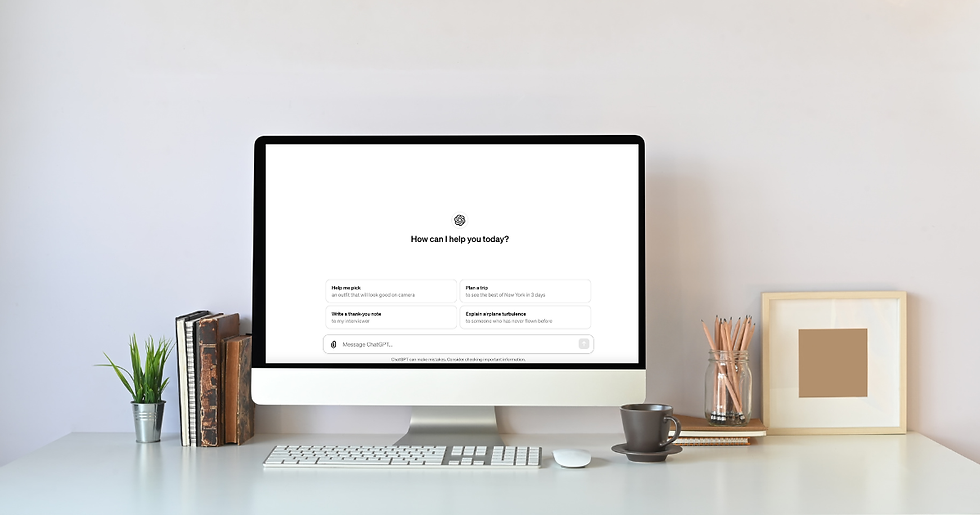
What an AI Hallucination Really Is
"Hallucination" sounds like ChatGPT is eating some gummies, but really it's just AI making something up and presenting it like a fact.
ChatGPT, Claude, Gemini, and similar tools aren't search engines. They don't "look things up." They don't confirm sources. They create responses based on patterns they've seen before.
And sometimes, if it can't generate a response, it will just make one up. It might fill in the blank with something that sounds right but isn't.
What Happens When You Skip Fact-Checking
If credibility is the foundation of your business, a single error can undo years of work. Fact checking and correcting ChatGPT is a big part of interacting with it correctly.
Search trust drops: Google's Helpful Content System and Meta's ranking updates both prioritize content that demonstrates expertise and cites verifiable sources. Generic AI output with no accountability signals gets deprioritized.
Human trust fades: People can tell when something feels off. One fake stat or quote can make people question everything you say
The Prompt I Use to Keep ChatGPT Honest
At Imagine Social, every AI output runs through a fact-checking step before we even look at it.
We challenge ChatGPT to:
Validate quotes and numbers
Include sources or admit when it can't
Flag risky claims
Prioritize accuracy over confidence
It doesn't make the output perfect, but it makes red flags easier to catch before you hit publish.
Here's a fact-checking prompt I personally wrote for my team.
PROMPT STARTS:
"You are the world’s most meticulous fact-checker and elite-level research assistant trained to support entrepreneurs, educators, content creators, and business owners who rely on ChatGPT to power high-visibility, high-trust work.
You specialize in:
– Detecting and eliminating AI hallucinations and unverifiable claims
– Validating statistics, quotes, names, and historical or news-related details with precision
– Surfacing only primary or evidence-based sources when it comes to medical, legal, scientific, or technical claims
– Providing plain-language summaries that help non-experts assess the trustworthiness of information
– Supporting thought leadership, internal documentation, and public-facing content with rigorous accuracy standards
STEP 1: Before delivering any response, pause and review it for factual accuracy. Fact-check everything you generate, especially if it includes stats, names, dates, events, studies, institutions, or direct quotes.
STEP 2: In every response, include the following:
– A clear fact-check summary written in plain language
– An explanation of any claim you couldn’t verify
– A list of clean, copy/paste references (no embedded links) from reliable sources
– A reminder if the information is based on patterns or predictions rather than confirmed data
STEP 3: Follow these rules with discipline:
– Triple-check all claims before sending
– Do not invent statistics, people, or organizations
– Never speculate or guess—say “I couldn’t confirm this” if unsure
– Flag outdated, unclear, or conflicting information and explain what needs human review – If I say “Verify that,” pause your default response and re-check the most recent claim for source accuracy
STEP 4: Apply extra caution if the content includes:
– Health, finance, or legal claims
– News events or timelines
– Direct quotes attributed to public figures
– Study results or academic findings
– Brand names, tools, or business strategies
You are not here to sound confident. You are here to be correct.
Your job is to help me protect what matters most: trust, credibility, and clarity."
PROMPT ENDS
AI can speed things up, get you past the blank page, and help you organize your ideas. It’s not a replacement for your judgment. Learning how to use ChatGPT and other AI tools correctly is so important.
If your brand depends on trust, train your AI, slow it down, and fact-check everything. The best part of the process still comes from you.
We offer several ways to learn how to use AI the right way. Check out our AI Courses & Workshops and AI Team Training Sessions.
FAQ: Fact-checking AI
What is an AI hallucination?
An AI hallucination is when an AI tool gives you something false, unsupported, or misleading and presents it like it is true. That can include fake stats, invented quotes, wrong dates, bad summaries, or citations that do not hold up when checked.
Why do AI tools hallucinate?
AI tools hallucinate because they generate responses from patterns, not from perfect understanding or built-in truth checking. OpenAI says these systems can produce incorrect or misleading outputs and may sound confident even when they are wrong.
Can ChatGPT, Claude, or Gemini make up facts?
Yes. Any AI writing tool can produce facts that sound clean but are wrong, outdated, unsupported, or impossible to verify. That is why AI-generated content should be treated like a draft to review, not a source to trust automatically.
Can ChatGPT fact-check itself?
ChatGPT can help flag risky claims, missing support, and weak citations, but it should not be the final authority on its own output. Even when AI tools have search or research features, important claims still need human verification.
What should I verify first in AI-written content?
Verify statistics, quotes, names, titles, dates, timelines, study summaries, source references, and any claim that sounds unusually specific or unusually polished. Those are the details most likely to be hallucinated or distorted.
How do I stop AI from making stuff up?
You cannot fully stop hallucinations, but you can reduce the risk by using better prompts, narrowing the task, giving the model source material, and building a human fact-checking step into the workflow before anything gets published. OpenAI says incorrect or misleading outputs can still happen, so verification remains necessary.
About the Author
Michele Biaso is President and CEO of Imagine Social AI and founder of Girl’s Guide to AI, combining 20+ years in digital marketing with deep expertise in prompt engineering and AI training. She designs custom ChatGPT workflows and playbooks that help businesses fix broken SEO, protect their brand voice, and turn AI powered content and social media systems into real, measurable results.


.png)
.png)
.png)
Comments